If you’ve ever hung around a construction job site long enough, you’ve probably seen that big, loud construction compressor parked near the back, humming away like a stubborn, overworked bee. It’s powering the jackhammers, nail guns, maybe even the air tools the crew uses to move steel or shape concrete—you name it. But if you’ve ever taken a peek under that metal housing, you might have spotted a tiny, easy-to-miss part holding the whole thing together, and I’m not talking about the bolts. That’s the air compressor coupling, and trust me, if this part gives out mid-job, you’re looking at a day of lost time, grumpy crews, and way more stress than you’d expect. Construction Compressor
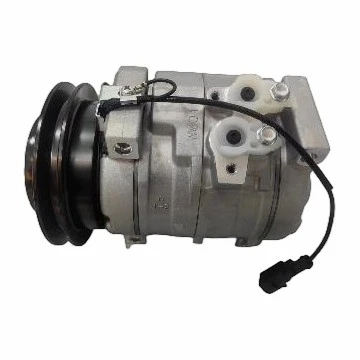
I’ve been in the construction compressor game for over a decade, and I’ve seen every single headache a bad coupling can cause. Last year, I got a call from a small paving crew in Dallas who’d been running a compressor for three years without replacing the coupling. They were halfway through a parking lot job when the coupling snapped, and their whole compressor died right there. They had to rent a backup for $800 a day, plus they missed their deadline, and the client almost nixed their next project. That’s the thing about couplings—most guys don’t think about them until they break, and by then it’s already too late.
Let’s keep this real, no stuffy engineering jargon. The air compressor coupling’s job is simple: it connects the compressor’s motor (the electric or gas-powered thing that makes the compressor turn) to the air end (the part that actually compresses the air). It’s like the middleman between two people who need to work together—if the middleman is off, they can’t sync up, and stuff falls apart. Construction sites are rough, too. They’re dusty, dirty, bumpy, and sometimes you’re running that compressor 12 hours straight, no breaks. The coupling has to handle all that abuse, plus keep the motor and air end aligned perfectly. If it’s not doing its job, you get vibrations, which wear out parts faster, or even a total breakdown.
Now, not all couplings are made the same, especially for construction compressors. Back when I first started, most guys used rigid couplings—they’re cheap, they’re simple, but they don’t take well to movement. If your job site is on uneven ground, or the compressor shifts a little when someone bumps it, a rigid coupling will crack or snap in no time. These days, almost every construction compressor supplier I know pushes flexible couplings, and for good reason. Flexible couplings have give—they can handle a little misalignment from rough terrain, absorb the shock when you start the compressor up, and even dampen some of that loud vibration. That’s a big deal, too: less vibration means less noise on the job, which is better for the crew’s hearing and keeps you from getting cited by OSHA for noise violations.
Wait, let’s get into the nitty-gritty of how these things actually work, without making your head hurt. A typical flexible coupling for a construction compressor has two halves: one bolts to the motor’s shaft, the other bolts to the air end’s shaft. Between them, there’s a flexible insert—usually made of polyurethane, rubber, or sometimes a composite material that can handle heat and dirt. That insert is the star. When the motor spins, it turns one half of the coupling, which grabs the insert, which turns the other half, which spins the air end. If the shafts are even a little off (which they always are on a moving job site), the insert flexes to cover that gap. No more extra wear, no more vibration, no more broken shafts.
But here’s what a lot of new compressor owners don’t know: even the best flexible coupling will fail if you don’t pick the right one for your job. I had a guy last month who bought a cheap coupling for his 180 CFM (cubic feet per minute) compressor, thinking “bigger compressor = bigger coupling, right?” Wrong. He used the same type he had on his old 90 CFM unit, and it lasted three weeks before the insert tore. Construction compressors come in all sizes—from the tiny portable ones you can tow behind a pickup for small jobs, to the big stationary units for mining or highway work. Each one needs a coupling rated for its torque (that’s the twisting power the motor puts out) and its operating speed. If you mismatch that, you’re asking for trouble.
Dust is another huge enemy of couplings on construction sites. I’ve seen guys just let their compressor run in a cloud of concrete dust or sawdust, and that dust gets into the coupling, wears down the insert, and makes the whole thing stiff. When the insert is stiff, it can’t flex, so you get more vibration, more misalignment, and eventually, a breakdown. That’s why regular inspections are non-negotiable. I tell every customer of mine to check their coupling every 100 operating hours—look at the insert, make sure there’s no cracks, no wear, no dust buildup. If it looks like it’s getting thin, replace it before it snaps. It’s a 10-minute job, and a $50 part, vs. a $5,000 compressor repair and a whole day of lost work.
Another thing I’ve learned over the years: construction compressors don’t just work in nice weather. You’re running them in 100-degree Texas heat, freezing Michigan winters, rainy Pacific Northwest mud. The coupling has to handle that, too. A rubber insert that works fine in 80 degrees will get rock hard in 20 degrees, and a polyurethane one might melt a little in 110. That’s why we (as your construction compressor supplier) stock couplings rated for all climates, not just one size fits all. We’ve had customers who thought “couplings are couplings” until their winter job in Minnesota ate through three off-brand inserts in a month. Once they switched to the cold-rated ones we carry, they haven’t had a problem since.
Let’s talk about common myths, because there are a lot of them. Some guys say “I don’t need a coupling, I can just couple the shafts directly.” Yeah, you can try that, but it’s called a solid shaft connection, and it’s a recipe for disaster. No coupling means no shock absorption, no misalignment compensation, so your shafts will wear out in months, not years. Another myth: “couplings only matter if you’re running heavy tools.” No way—even a small portable compressor for framing or finish work needs a good coupling. I had a carpenter in Atlanta whose compressor coupling died mid-trim job, and he had to pause for two hours while he waited for a replacement. That’s two hours he could’ve been installing trim, billing hours that he lost.
What about when a coupling actually does fail, and you need to fix it fast? On a construction site, time is money. That’s why we keep a full stock of couplings for every compressor model we sell, same-day shipping if you need it. No waiting a week for a part to come in from overseas—we know you can’t afford that. We also have a team that can walk you through replacing it over the phone, if you’re not super handy with tools, so you’re not stuck with a broken compressor on a Saturday.
Wait, let’s get back to why this matters for construction compressors specifically, not industrial ones. Industrial sites might be controlled, temperature-regulated, and have regular maintenance schedules. Construction sites are chaotic. You move the compressor from job to job, you run it hard, you don’t always have time to do a full service every week. The coupling is the part that has to take all that chaos and keep the compressor running. It’s the unsung hero of the compressor, and most people don’t even know its name until it breaks.
I’ve seen too many job sites lose tens of thousands of dollars because of a $100 coupling. That’s why we always advise our customers to spend a little extra up front on a quality coupling, instead of going for the cheapest one they can find. A good flexible coupling from a reputable supplier will last twice as long, handle more abuse, and save you way more money in downtime costs. I’m not just saying that because I sell couplings—I’ve seen it happen too many times. The cheap stuff always costs more in the long run.
Let me wrap this up, because I don’t want to ramble, but I do want you to leave this knowing that the air compressor coupling isn’t a trivial part. It’s the link between your compressor’s power and your tools, it’s the thing that keeps your job moving, and it’s worth taking care of. If you’re in the market for a new construction compressor, or you just need a replacement coupling for the one you already have, we’ve got you covered. We build our compressors with the right couplings from the start, we stock parts for every model, and we’re here to help you avoid that headache of a mid-job breakdown. If you want to chat about what size coupling you need, or what type works best for your job sites, hit us up. Don’t wait until your coupling snaps—take care of the small part, so you can focus on the big job.
Construction Compressor References
- Compressed Air Gas Handbook, 7th Edition, Compressed Air and Gas Institute, 2021, pp. 124–131.
- Construction Equipment Maintenance Best Practices, National Association of Construction Equipment Rental, 2022, pp. 89–95.
- Flexible Coupling Design and Application for Industrial Machinery, Power Transmission Engineering Magazine, Vol. 68, No. 4, 2023, pp. 45–50.
Jiangsu Nuoyan New Energy Vehicle Air Conditioning Co., Ltd.
With abundant experience, we are one of the most professional construction compressor manufacturers and suppliers in China. We warmly welcome you to buy customized construction compressor at competitive price from our factory. Also, quotation is available.
Address: No. 7 Xingyuan Road, Huangqiao Economic Development Zone, Taixing City, Jiangsu
E-mail: nuyantech2026@163.com
WebSite: https://www.nuyantech.com/
