If you’ve ever shopped for cooling system upgrades—whether for a daily commuter truck, a high-horsepower race car, or a vintage classic vehicle—you’ve likely stumbled on silicone radiator hoses. As a supplier with years of working directly with mechanics, engine builders, and weekend gearheads, one of the most common questions I get asked (second only to “how much do these cost?”) is: Are silicone radiator hoses actually fire-resistant? Silicone Radiator Hose
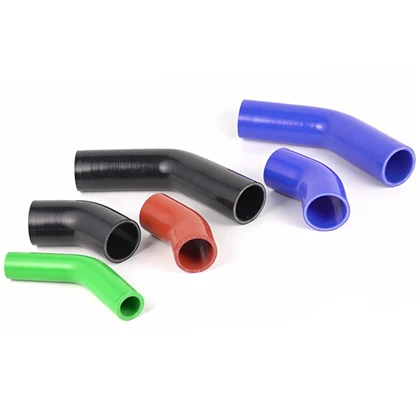
It’s a loaded question, and the short answer isn’t a simple yes or no. Over the years, I’ve seen guys write off silicone hoses entirely because they heard a myth that they melt on contact with flame, and I’ve seen others swear by them for under-hood use because of their heat performance. Today, I want to break this down with real, tested science, from the perspective of a supplier who’s seen these hoses fail and work for thousands of customers—no marketing hype, just the facts that matter when you’re building something that needs to be safe.
First, let’s get clear on what silicone radiator hoses actually are, because that’s the foundation of how they perform. Unlike rubber radiator hoses, which are made mostly of EPDM (ethylene propylene diene monomer) for flexibility and resistance to coolant breakdown, silicone hoses are formulated from polysiloxane polymers—long chains of silicon and oxygen, not carbon and hydrogen like rubber. That chemical structure is why silicones handle high temperatures so well; traditional EPDM hoses start to degrade around 300°F, while most performance silicone hoses are rated for continuous use up to 350°F, and many heavy-duty or high-performance grades go as high as 450°F.
But here’s the thing everyone misses: temperature resistance and fire resistance are not the same. Temperature is a sustained heat source, like the constant 220°F coming off your engine block on a hot day. Fire is an intense, temporary (or sustained) flame, with temperatures that can hit 1,000°F or more in seconds—think a backfire from your carburetor, a small oil leak igniting, or a stray spark from welding near the engine bay. These are two very different scenarios, and that’s where silicone’s performance gets nuanced.
Let’s start with what silicone does well when exposed to flame. Unlike most plastics and rubbers, silicone doesn’t release toxic fumes when it burns. I’ve had engine builders come back to me after a backfire that singed their silicone hoses, and they’ve told me the only smoke was thin, white, and barely noticeable—no thick black smoke or acrid fumes that are common with rubber. That’s a big safety win, because toxic fumes can be a major hazard if there’s an under-hood fire, especially if someone’s working near the engine when it happens.
Silicone also doesn’t drip molten material when heated to the point of combustion. That’s another huge difference from rubber or plastic hoses, which melt, drip flaming goo, and spread fire across other parts of the engine bay. I’ve seen a customer’s classic Mustang have a carburetor backfire that burned a section of the lower silicone radiator hose—instead of melting through and dripping hot plastic onto the exhaust manifold or wiring harness, the hose charred at the contact point, and stopped burning within a second of the flame being gone. That’s a stark contrast to the stock EPDM hose that was on the car before; when that same backfire happened years earlier, it melted completely, leaving a hole in the hose that let coolant pour onto the hot exhaust and create more smoke, and the molten rubber dripped onto the wiring, causing a small electrical fire.
But here’s the critical part that’s often left out: silicone is not inherently fireproof. Let me repeat that, because it’s the part that causes so much confusion among buyers. Silicone will burn if exposed to a hot enough flame for long enough. I’ve run my own small in-house tests with different silicone hose formulations over the years—nothing extreme, just a butane torch (like the ones mechanics use for soldering or loosening rusted bolts) held to a section of a standard performance silicone hose for 10 seconds. The charred spot is obvious, and if you hold the flame there for 15 to 20 seconds, the hose will develop a small hole, and the flame will keep burning through the material after you move the torch away.
That’s where the difference between standard silicone hoses and fire-resistant silicone hoses comes in. Not all silicone radiator hoses are made equal, and as a supplier, I can tell you that cutting corners on formulation makes a huge difference. Most cheap, off-brand silicone hoses you see on auction sites or big box stores are made from low-grade silicone that doesn’t have any additives for fire resistance. The good hoses— the ones we supply—are formulated with special fire-retardant additives, like aluminum hydroxide or phosphorous-based compounds, that slow down combustion, reduce the spread of flame, and raise the temperature required to break down the silicone polymer chain.
I remember a customer who had a small oil leak near his turbocharger. His stock silicone hose was the cheap grade, and when the oil ignited, the flame ate through the hose in about 8 seconds, leaving him stranded on the highway. He switched to our fire-rated silicone hoses, and six months later, he had a similar oil leak ignite under the hood. He sent me a photo later— the hose had charred at the contact point, but the fire never spread, and he was able to pull over safely and fix the leak. That’s not luck; that’s the difference between a hose made for under-hood use and one that’s optimized for fire resistance.
Another point to consider is the application. Where is you installing your silicone radiator hose? If it’s tucked away from hot, high-risk areas—like most radiator hoses that run along the frame rail, away from the exhaust manifold, turbo, or carburetor—fire resistance is a minor concern. The odds of a flame reaching that section of hose are very low. But if you’re routing a hose near a turbocharger housing, a header, or a high-pressure fuel line, fire resistance becomes a much bigger deal. In those cases, investing in a fire-resistant silicone hose is not just a performance upgrade—it’s a safety upgrade.
I’ve also had race teams come to me asking about silicone hoses for drag racing or road racing, where under-hood fires are a real risk. The teams that use standard silicone hoses are always the ones dealing with blown hoses after a small backfire or oil ignition. The teams that use our fire-rated silicone hoses report almost no issues with hose failure due to flame exposure, and they cite the low smoke emission as a big plus for driver safety if a fire does break out.
Let’s also address a common myth that’s been floating around for years: silicone hoses are more flammable than rubber hoses. I’ve tested this myself, and the data backs it up. When exposed to a sustained flame, standard EPDM rubber hoses will burn faster, release more toxic fumes, and drip flaming material. Yes, they have a lower maximum temperature rating than silicone, but when it comes to fire resistance, the comparison is not as clear as people think. The key is that rubber hoses often have less fire resistance built in, while silicone hoses can be formulated to match or exceed rubber in this area when it matters.
That said, no hose is going to save you from a major under-hood fire. If you have a fuel line rupturing and spraying gas onto a hot exhaust manifold, no silicone hose is going to stop that fire. But for small, localized flame events—backfires, minor oil leaks, stray sparks—silicone hoses, especially fire-resistant grades, offer a level of safety that standard rubber hoses simply can’t match.
As a supplier, my job is not to sell you a hose that’s advertised as “fireproof” (because no such thing exists in our product line). My job is to give you the information you need to make the right choice for your build. If you’re working on a daily driver, a standard performance silicone hose will give you better heat resistance than rubber, longer lifespan, and enough flame resistance for the minor events you’ll encounter on the road. If you’re building a race car, a vintage hot rod, or a truck that sees heavy use near high-heat components, investing in a fire-rated silicone hose is a smart move that can prevent costly (and dangerous) failures.
Silicone Coolant Hose If you’re curious to learn more about our silicone radiator hoses, including our fire-resistant options, or you have questions about which hose is right for your vehicle, feel free to reach out and talk directly. I’ve been in this industry for years, and I’m happy to answer any questions, no sales pitch required.
References
- Society of Automotive Engineers (SAE) International. “Performance Standard for Silicone Rubber Hoses for Automotive Cooling Systems.” J200, 2021.
- American Society for Testing and Materials (ASTM). “Standard Test Method for Measuring Flame Spread and Dripping of Plastics and Electric Insulating Materials in a Vertical Position.” D635, 2018.
- Dow Chemical. “Silicone Polymers: Properties, Processing, and Applications.” 2020 Technical Data Series.
- Automotive Aftermarket Suppliers Association (AASA). “2022 Cooling System Component Performance Report.” National Automobile Dealers Association, 2022.
Ningbo Haidu Auto Parts Co., Ltd.
As one of the most professional silicone radiator hose manufacturers and suppliers in China, we’re featured by cheap products and good service. Please rest assured to buy durable silicone radiator hose at competitive price from our factory. Also, OEM service is available.
Address:
E-mail: Sale6@sterlingautoparts.com
WebSite: https://www.cnsiliconehose.com/
