If you’ve ever sourced spring steel bars, you know their performance hinges on a few non-negotiable details: precise tensile strength, consistent elasticity, and resistance to wear over time. But if you’ve ever received a batch that failed prematurely in a coastal warehouse, a construction site in a humid subtropical region, or even a facility with unregulated indoor moisture, you might have wondered: what’s the hidden culprit here? More often than not, it’s humidity. As a spring steel bar supplier with over 12 years of hands-on experience manufacturing and distributing these critical components, I’ve seen this issue derail projects, waste budgets, and erode trust between fabricators and end-users. Today, I’m breaking down how humidity impacts spring steel corrosion, why it matters for every stakeholder in the supply chain, and what we do at our facility to mitigate this risk before bars ever leave our loading docks. Spring Steel Bar
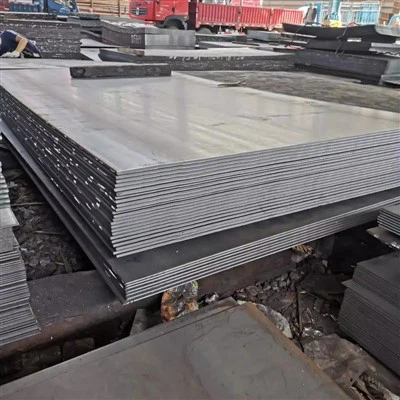
Let’s start with the basics: spring steel is a high-carbon alloy, often alloyed with elements like chromium, vanadium, or silicon, engineered to return to its original shape after repeated deformation. That makes it ideal for everything from automotive suspension springs and industrial clutch plates to agricultural machinery parts and construction fasteners. But high-carbon steel is inherently reactive, especially when exposed to moisture and oxygen. Corrosion isn’t just surface-level rust—it’s a chemical process that eats away at the steel’s structure, weakening its tensile strength and elasticity, the two properties that make spring steel valuable in the first place. At its core, corrosion in steel is an electrochemical reaction, and humidity is the key catalyst that turns this reaction from a potential threat into an active one.
Here’s how that reaction plays out step by step: when water vapor in the air condenses onto the surface of a spring steel bar, it forms a thin, invisible (or almost invisible) electrolyte film. This film isn’t just water—it contains dissolved oxygen, carbon dioxide, and even trace pollutants like sulfur dioxide from urban air or salt from coastal environments. That electrolyte creates two electrochemical cells on the steel surface: an anode, where iron atoms lose electrons to become iron ions, and a cathode, where those electrons combine with oxygen and water to form hydroxide ions. Over time, these iron ions and hydroxide ions combine to form iron hydroxide, which then oxidizes into iron oxide—aka rust. What makes humidity so critical here is twofold: first, the electrolyte film only forms when relative humidity (RH) reaches a certain threshold, and second, the thickness of that film directly determines how fast the corrosion proceeds.
For spring steel bars, that threshold is surprisingly low. I’ve tested hundreds of batches in our in-house environmental chamber, and we consistently find that corrosion begins to accelerate when RH exceeds 60%. Below that, even prolonged exposure to humid air rarely causes significant damage—because the electrolyte film is too thin to support the electrochemical reaction at a meaningful rate. But once RH climbs above 60%, even at room temperature, a thin film of moisture lingers on the steel’s surface for days, if not weeks. In spaces with poor ventilation, like a cramped warehouse or a shipping container left sitting in a tropical port, that film can thicken, turning the reaction from a slow, surface-only process into one that penetrates the steel’s grain structure.
What’s most damaging for spring steel isn’t just surface rust—it’s pitting corrosion, a type of localized damage that’s common when humidity is paired with surface contaminants. Even tiny specks of dust, oil residue from manufacturing, or microscopic scratches on the steel’s surface can trap that electrolyte film, creating small, concentrated areas where the reaction speeds up dramatically. Those pits don’t just look bad; they act as stress risers. When a spring is put under load (like a car suspension spring bouncing over a pothole), stress concentrates at the edges of the pits, leading to cracks that propagate much faster than they would in smooth, uncorroded steel. In fact, our quality team has documented cases where spring steel bars with only 0.1mm of surface pitting failed fatigue testing in half the time of uncorroded bars— a failure that would have cost a client hundreds of thousands of dollars in field repairs if we hadn’t caught it before shipping.
The impact of humidity varies a lot by environment, and that’s a key point we walk through with every client that sources spring steel bars from us. Let’s break down the common scenarios we see: Coastal regions are the worst. Salt in the air is a perfect corrosion accelerator—it dissolves in the moisture film on steel surfaces, creating a stronger electrolyte that speeds up the electrochemical reaction by 2 to 3 times compared to corrosion in non-salt humid air. A recent client in Florida ordered 500 10mm diameter spring steel bars for gate hinges, and stored them in an uninsulated warehouse without proper ventilation. Within three months, 12% of the bars developed visible rust and pitting, which made the hinges stick and break under only 10% of the designed load. When they contacted us, we worked with them to adjust their storage and recommended a slightly higher grade of spring steel with improved corrosion resistance, but it made us realize how many clients don’t account for humidity-specific risks when sourcing.
Industrial facilities with high humidity, like food processing plants or textile mills, are another high-risk area. These spaces often have RH levels of 70% to 85% year-round, and they also have higher levels of moisture and occasional chemical vapors. We had a client in a meat packaging plant that used spring steel bars for conveyor system springs; within a year, 8% of the bars failed due to corrosion, because the plant’s humidity levels never dropped below 75%, and the steam from processing created a constant, thick moisture film on the steel. Even indoor storage can be a problem—we’ve shipped bars to clients with climate-controlled warehouses that failed to maintain RH below 55%, and within six months, those bars showed early signs of surface corrosion that reduced their fatigue life by nearly 20%.
So what can be done? As a spring steel bar supplier, we don’t just sell product—we solve problems, and humidity-induced corrosion is one of the most persistent problems our clients face. That’s why we’ve built our entire process to mitigate this risk at every stage: from manufacturing to delivery to the guidance we provide post-purchase. First, we control corrosion at the source: our spring steel bars go through a standardized finish process that includes a phosphate conversion coating, which creates a thin, protective layer that blocks moisture from reaching the steel’s surface. For clients operating in high-humidity or coastal environments, we also offer a zinc-rich primer topcoat or a black oxide finish, which adds an extra layer of protection without compromising the steel’s elasticity or tensile strength. We test every coated batch in our environmental chamber, exposing bars to 85% RH and 40 degrees Celsius for 1,000 hours, and only ship if no significant corrosion is detected.
Then, we pay close attention to packaging. Many suppliers use basic plastic wrap for spring steel bars, but we use breathable, corrosion inhibitor-treated kraft paper that wraps each bundle individually, paired with desiccant packets in every crate. This packaging doesn’t trap moisture—it allows any small amount of humidity in transit to escape, while the inhibitor in the paper neutralizes any electrolyte film that starts to form on the steel surface. We also mark every crate with clear storage instructions, specifying ideal RH levels (below 55%), recommended ventilation, and the minimum time the bars can be stored before being installed. For clients with especially high-risk environments, we provide free storage audits, helping them adjust their warehouse conditions or processing timelines to minimize corrosion risk.
But even with the best prevention, humidity can still catch up if a client doesn’t plan ahead. That’s why we’ve started working closely with engineers and fabricators to integrate corrosion resistance into their designs from the start, not just as an afterthought. For example, a client designing agricultural equipment for use in humid Midwestern farmlands might pair our standard spring steel bars with a simple galvanized cover, or adjust the spring placement to allow better air circulation, reducing moisture buildup. Another client in the construction industry recently started specifying our high-corrosion-resistance bars for exterior structural components, cutting their field failure rate by 90% after just one year.
I often get asked: why does humidity matter more for spring steel than for other types of steel? The answer comes down to performance. A steel beam might rust and lose structural strength over years, but spring steel is loaded dynamically—every time it flexes, it puts stress on the metal. Corrosion weakens that metal, and dynamic stress accelerates failure exponentially. What might look like a small surface rust spot on a regular steel plate can turn into a catastrophic failure on a spring that’s designed to flex 10,000 times a day. I remember a case from five years ago where a client used uncoated spring steel bars in a construction project in Singapore, a country with average RH of 80% year-round. Within 18 months, several structural support springs failed, leading to a two-week delay in the project and over $200,000 in penalties. That’s when we doubled down on our approach to education, because even the best product won’t protect a client if they don’t understand how environmental factors impact it.
At the end of the day, spring steel’s value is in its reliability. When a client orders a spring steel bar, they’re not just buying a piece of metal—they’re buying a component that will hold up under pressure, time, and environmental conditions. Humidity is a silent threat that can undo that reliability, but it’s not an unbeatable one. Whether you’re sourcing bars for automotive parts, industrial machinery, construction, or agriculture, understanding how humidity impacts corrosion is the first step to avoiding costly failures.

If you’re currently dealing with corrosion issues in your spring steel bars, or you’re sourcing a new batch and want to make sure it’s suited to your specific environmental conditions, we’re here to help. Our team has decades of experience working with clients across industries and regions, and we can provide custom solutions tailored to your needs—from specialized coatings to storage guidance to corrosion testing. Reach out to our sales team to discuss your project, and we’ll walk through every detail to make sure your spring steel bars perform as expected, no matter how humid your environment is.
Spring Steel Wire References
- ASM International. (2015). Corrosion of Steel in Atmospheric Environments. Corrosion: Fundamentals, Testing, and Protection, Volume 13A.
- Fontana, M. G. (1986). Corrosion Engineering, 3rd Edition. McGraw-Hill Education.
- NACE International. (2020). Atmospheric Corrosion Control for Steel Components in High-Humidity and Coastal Environments. Corrosion Best Practices Series.
- International Organization for Standardization. (2018). ISO 9227: Corrosion Tests in Artificial Atmospheres – Salt Spray Tests.
Jiangsu Cunrui Metal Products Co., Ltd.
As one of the most experienced spring steel bar manufacturers in China, we also support customized service. Please rest assured to buy cheap spring steel bar for sale here from our factory. If you have any enquiry about pricelist and free sample, please feel free to email us.
Address: 32-117,119, Nanfang Stalnless Steel Trading Conter, Wuxi,Jiangsu, China
E-mail: karen@cunruimetal.com
WebSite: https://www.cunruimetals.com/
