Hey everyone, it’s Jake here from the clean room sandwich panels team – you know, the guys who get that panels right the first time so your labs, pharma facilities, or data centers don’t have to play catch-up with air quality or structural issues. Today I’m sitting at my desk staring at a stack of recent client feedback, and half of the questions I get boil down to this: “What actually makes up the core of these panels? I thought it was just foam, but my last supplier’s panels got ruined in high humidity.” Fair call – so let’s break this down like we do with our new interns, no fancy jargon, just real stuff that actually works for clean rooms. Clean Room Sandwich Panels
First off, let’s cut the crap: clean room panels aren’t the same as the cheap stuff you see on warehouse walls. The core is the secret sauce here – it’s the middle layer that bridges the rigid outer skins (usually aluminum, stainless steel, or composite) with everything clean rooms need: consistent air flow, zero particles, resistance to chemicals, and that structural oomph to hold up ceiling tiles or wall panels without bowing. If the core is garbage, even the best outer skins won’t save your clean room from failing ISO standards. I’ve seen a client lose a $200k pharma audit because their supplier used the wrong core – yep, that’s not a flex.
Let’s start with the most common core, and honestly the workhorse of our industry: POLYURETHANE (PU) FOAM. Wait, before you zone out – no, not the cheap craft foam you use for DIY projects. This is closed-cell PU, and it’s the go-to for 60% of the panels we sell, for good reason. Closed-cell means those little bubbles are sealed tight, so moisture can’t seep in – huge for clean rooms where humidity control is non-negotiable. It’s also super insulating, so if your clean room needs to stay at a precise temp (like a vaccine manufacturing suite), PU keeps energy costs from skyrocketing. The best part? It’s non-abrasive, so when we cut it to fit panel sizes, it doesn’t shed tiny fibers that get trapped in the clean room’s HEPA filters. We test every batch for particle emission levels – our PU cores come in under 10 particles per cubic foot at 0.5 microns, which is way below ISO Class 5 requirements. The only catch? PU doesn’t love constant exposure to strong acids or solvents, so we don’t push it on pharma facilities that handle bleach or harsh sanitizers all day.
Next up, another fan favorite: POLYISOCYANURATE (PIR) FOAM. Think of PIR as PU’s sturdier, fire-resistant cousin. If your clean room is in a healthcare facility or a manufacturing space where fire code is strict, PIR is your guy. It has that same closed-cell structure as PU, so moisture resistance is solid, but it has a higher ratio of isocyanurate groups, which makes it way more fire-retardant. I’ve had clients from surgical centers swear by PIR – it’s self-extinguishing, so if something sparks near a wall, the core doesn’t keep burning and spewing toxic fumes into the clean air stream. It’s also denser than regular PU, so it holds up better to heavy loads – like if you’re mounting equipment shelves to your panel walls. The downside? PIR is a little pricier than PU, and it can be more brittle if it’s cut wrong, so we train our installers to handle it gentle. No excuses there – we send a 2-page cheat sheet with every PIR panel order, trust me.
Now, let’s talk about the one core that’s taken off in the last 5 years because of pharma and biotech: EXPANDED POLYSTYRENE (EPS) – wait, wait, not the kind used in packing peanuts. These are high-density, closed-cell EPS cores, sometimes called “structural EPS” or S-EPS. A lot of old-school suppliers write EPS off as cheap, right? But that’s because they’re using the regular stuff. Our EPS cores are formulated to have super tight cell walls, so they don’t shed particles, and they’re actually pretty resistant to mild chemicals like ethanol or hydrogen peroxide, which are common sanitizers in biotech labs. The big win with EPS? It’s lightweight, so if you’re retrofitting an existing clean room, you don’t have to reinforce the ceiling structure to hold the panels. I did a retro fit last year for a gene therapy lab – they had a 1970s ceiling that couldn’t handle heavy panels, and our EPS cores let them get a Class 7 clean room without tearing out the whole ceiling. The only thing? It’s not great for very high-heat areas – if your clean room is near an oven or sterilization unit, we skip EPS and go for something else.
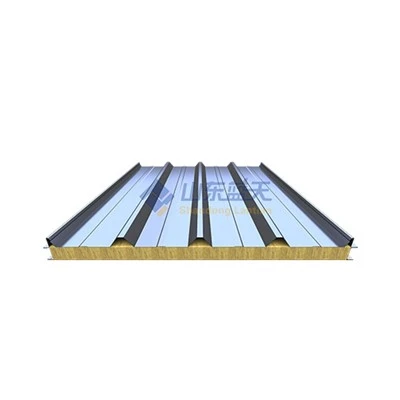
Now, the specialty cores – the ones we save for when a client has a super specific need. First up: MINERAL WOOL (aka ROCKWOOL). This is the hardcore option for facilities that need absolute fire safety – like nuclear labs, or pharmaceutical manufacturing areas that handle large volumes of flammable materials. Mineral wool is made from spun rock, so it’s non-combustible, melts at like 1800°F, and doesn’t shed any organic particles (that’s huge for clean rooms). The downside? It’s way denser than foam cores, so panels are heavier, and it can hold moisture if it’s not properly sealed – so we always pair mineral wool cores with a vapor barrier outer skin. I once had a semiconductor fab come to us after a different supplier’s mineral wool panels absorbed water during a pipe leak – they had to shut down for 3 days to scrub all the particles from their wafers. So mineral wool is awesome, but only if you install it right.
Last specialty core I’m gonna touch on is PHENOLIC FOAM. This is the underdog – it’s got amazing fire resistance, even better than PIR, and it’s super low in VOCs, which is perfect for clean rooms that handle sensitive drugs or electronics. Phenolic foam is closed-cell, so moisture resistance is solid, and it doesn’t emit any nasty fumes when it’s cut, which is a big plus for installers working in occupied spaces. The catch? It’s more brittle than PU or EPS, so it can crack if it’s dropped during shipping, and it’s a bit more expensive. We only recommend phenolic for ultra-high-grade clean rooms – like ISO Class 3 or 4 – where particle count has to be microscopic. I had a client building a new mRNA manufacturing facility go with phenolic last year, and they aced their pre-construction audit on the first try. Worth the extra cost for that kind of peace of mind.
Wait, let’s clear up a myth I hear all the time: “Does the core affect clean room air quality?” 100% yes. If your core sheds particles, those particles go straight into the air stream, get trapped in your HEPA filters, and shorten their lifespan – which means more filter changes, more downtime, more money. We test every core we use for particle emission, VOC levels, and chemical resistance before it even gets to our warehouse. No cutting corners here. I’ve had clients ask if we use “eco-friendly” cores – and yes, all our foam cores are recyclable, and we’ve got mineral wool options made from recycled rock, so you can have a clean room and a clean conscience too.
Another thing: it’s not just about the core material, it’s about how it’s bonded to the outer skins. A bad bond means the core separates from the skin, creates gaps where air can leak, and particles can get trapped in that gap. We use a high-strength, low-VOC adhesive that’s formulated specifically for clean rooms – no regular construction glue here. That’s why our panels have a 10-year warranty, by the way. I can’t tell you how many times I see suppliers offer 2-year warranties for half the price, but they’re cutting corners on the core and the bond. You get what you pay for, plain and simple.
So when you’re picking core materials for your clean room, start with your requirements: what’s your ISO class? Do you need fire resistance? Will you be using harsh sanitizers? Do you have weight limits for ceilings or walls? For most general clean rooms (like labs, small pharma, or offices with strict air quality), PU or PIR is perfect. For retrofits, EPS is your best bet. For high-fire or ultra-senstive spaces, mineral wool or phenolic. Don’t just go with the cheapest option – that’s the mistake that costs you audits and downtime.

Look, I’ve been in this industry for 12 years, and I’ve seen every mistake in the book. Cheap cores, bad bonds, not testing particle emission. We don’t do that. If you’re looking for clean room sandwich panels that actually work, with cores that are tested, durable, and tailored to your needs, hit us up for a chat. No sales pitch, no confusing jargon – just straight answers and panels that will pass your next audit with flying colors.
XPS Sandwich Panels References:
- International Organization for Standardization (ISO) 14644-1: Cleanrooms and associated controlled environments – Part 1: Classification of air cleanliness by particle concentration
- Clean Room Technology Association (CRTA) Guidelines for Panel Material Selection
- American Society for Testing and Materials (ASTM) E84: Standard Test Method for Surface Burning Characteristics of Building Materials
- Society of Manufacturing Engineers (SME) Clean Room Design and Installation Handbook, 2022 Edition
Shandong Lantian New Material Technology Co., Ltd.
Shandong Lantian New Material Technology Co., Ltd. is one of the most reliable manufacturers and suppliers of clean room sandwich panels in China, featured by quality products and low price. Please rest assured to buy bulk clean room sandwich panels for sale here from our factory. Contact us for pricelist and customized service.
Address: North End of Wanshida Road, Dianzi Town Industrial Park, Boxing County, Binzhou City, Shandong Province
E-mail: Lantian023@ltaaaaa.com
WebSite: https://www.ltpirpanels.com/
