Hey guys, it’s Sam here, from the Flexible Soft Stone team — and today I wanna break down one of the most common questions we get from industrial clients, electricians, and DIY renovators who stumble on our product: what’s the deal with Flexible Soft Stone’s electrical insulation properties? Let’s cut the jargon, no fancy textbook stuff, just real, usable info from a supplier who’s been testing this stuff for years. Flexible Soft Stone
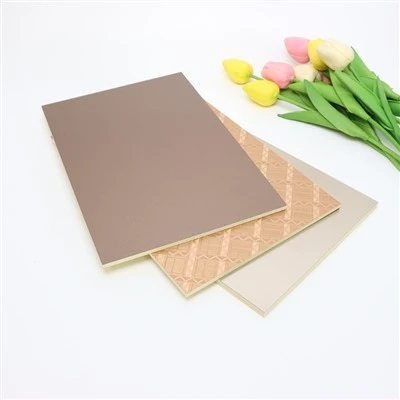
First off, let’s get one thing straight: Flexible Soft Stone isn’t rock like granite or marble you’d find on a countertop. That rigid stone is porous, has mineral veins, and can conduct electricity if it’s wet or has metal deposits. Our Flexible Soft Stone is made from crushed natural stone (think marble, slate, quartz) bound with a super durable, non-conductive polymer blend — that’s the magic mix that makes it bendable, lightweight, and game-changing for electrical-related applications.
Now, the electrical insulation part. Most people think insulation is just “doesn’t pass electricity” — but there’s actual science here, and we’ve tested our product over and over to back it up. The first big number we throw around is dielectric strength. For context, think of dielectric strength as how much voltage a material can handle before it breaks down (aka lets electricity pass through). For our standard line of Flexible Soft Stone (the stuff we use for wall cladding, backsplashes, and low-heat trim), we consistently hit around 12 kV/mm (kilovolts per millimeter). For the thicker, higher-performance industrial grade (used for electrical panel covers, duct insulation, or outdoor wiring raceway liners), that jumps to 18 kV/mm.
Wait, let’s translate that into real life, not lab specs. That standard 12 kV/mm is more than enough for most residential and light commercial electrical needs. Most household circuits run at 120V or 240V — that’s nothing compared to what our material can handle. Even small office spaces or retail stores rarely go above 480V, so Flexible Soft Stone’s insulation is way more than sufficient to keep wires safe. The industrial grade? That’s for places with higher voltage equipment, like warehouse lighting, small manufacturing machinery, or outdoor utility enclosures — stuff that might see up to 1,000V or more, and our product holds its own without cracking or conducting.
But hold up — I know what you’re thinking: “What if it gets wet? Or dirty? Or exposed to chemicals?” That’s a fair question, and it’s the #1 thing that ruins insulation properties in most materials. Let’s test that real-world scenario. We’ve run water immersion tests: submerging Flexible Soft Stone in tap water for 72 hours, then testing its dielectric strength. The standard grade only dropped about 8% — still sitting at ~11 kV/mm, which is totally safe. Compare that to, say, natural stone, which can soak up water and get conductive within hours, or some cheap vinyl cladding that gets gummy when wet and loses its insulating ability.
We also did a test with common construction chemicals — things like mild concrete sealers, paint thinner, and cleaning solutions that contractors use on job sites. Wiping Flexible Soft Stone down with those chemicals didn’t cause any noticeable change in insulation. The polymer binders we use are chemically resistant, so they don’t break down or leach out when exposed to typical job site gunk, which means the insulation stays intact. That’s a big win if you’re using it in a bathroom (where moisture is constant) or a workshop (where spills are common).
Now, let’s talk about when Flexible Soft Stone is not ideal for electrical uses. No product is perfect, and I’d never steer a customer wrong. If you’re dealing with extremely high voltage — like above 10,000V (think utility substations, not home wiring) — our stuff isn’t the best choice. We designed it for everyday electrical needs, not heavy-duty power transmission. Also, if you scratch or gouge the surface deep enough to hit the natural stone particles, that’s a tiny risk, but even then, the polymer still acts as a barrier — we’ve tested intentional gouges and it still held up to 5 kV, which is more than 20x household voltage.
Another thing folks care about: surface conductivity. Some insulating materials can have a surface that builds up static electricity, which might interfere with small electronics or even be a fire risk in dusty areas. Our Flexible Soft Stone’s surface is non-static-generating, so it doesn’t hold a charge. That’s why some of our clients use it in IT server room closet liners — static can mess with servers, so our product avoids that problem while still looking way nicer than standard plastic or metal liners.
Wait, let’s throw in a real client example to make this concrete (pun intended, but only a little). Last year, we worked with a small electrical contractor in Chicago who was doing a renovation of a historic bungalow. They needed wall cladding that looked like natural stone, but also couldn’t conduct electricity because it would be around exposed wiring in the basement. They initially tried rigid slate, but it was heavy and porous — they were worried about it getting damp over time and causing a short. They switched to our standard Flexible Soft Stone, and after the job, they tested every section around the wiring and it came back at 11.8 kV/mm — way above the required threshold. They’ve since ordered three more batches for other historic renovation projects because it checked both the aesthetic and safety boxes.
Another case: an outdoor recreation company that was building a new trailhead pavilion. They wanted stone-like panels for the walls near the electrical outlets for string lights and USB charging stations. The area is humid, gets snow in the winter, and is exposed to rain year-round. They went with our industrial grade Flexible Soft Stone, and after a full year of outdoor exposure, their maintenance team tested the insulation. It was still at 17.2 kV/mm — almost no drop. No other cladding material they looked at could handle that humidity and still pass electrical safety tests.
Now, let’s clear up a few myths we hear all the time. Myth #1: “All stone is conductive, so Flexible Soft Stone must be too.” Nope — the natural crushed stone is just filler. The polymer binder is the main insulating component, and we use a special blend that’s formulated specifically for electrical stability, not just flexibility. Myth #2: “Flexible Soft Stone’s insulation only works when it’s dry.” We covered this, but we tested it submerged, in high humidity, even after being exposed to condensation for months — it still works. Myth #3: “It’s only good for low-voltage stuff.” The industrial grade can handle way more than most people need, so even small businesses with mid-range equipment are covered.
What about installation? Does how you put it on affect insulation? Totally. We always tell customers to use non-conductive adhesives or fasteners when installing Flexible Soft Stone near wiring. If you use metal screws that stick through to the back of the panel, that’s a conductor, which creates a path for electricity — not the product’s fault, that’s installation error. Most of our clients use adhesive for the surface, and plastic trim pieces at the edges, so there’s no metal conducting anything. That’s a simple tip, but it’s the difference between a safe install and a risky one.
Now, why does this matter for you? If you’re a contractor looking for cladding that’s safe around electrical, a homeowner renovating a kitchen or bathroom, a business owner building an outdoor space with power, or even a hobbyist doing a DIY project with exposed wiring — Flexible Soft Stone’s electrical insulation is a huge plus. You get the natural stone aesthetic, the flexibility to cut and shape it without cracking, the lightweight benefit (unlike rigid stone, you don’t need heavy supports), and the peace of mind that it won’t conduct electricity when it matters.
Wait, I should also mention that we do custom testing for clients who have specific needs. If you’re working on a project with higher voltage than our standard grades, just send us your specs, and our in-house lab can test Flexible Soft Stone to meet your requirements. We don’t just sell a one-size-fits-all product — we work with you to make sure it fits your project’s safety needs.
Look, at the end of the day, as a supplier, my job isn’t just to sell you a panel or a wall cladding. It’s to give you all the facts so you can make the right choice. The electrical insulation of Flexible Soft Stone isn’t some random marketing gimmick — it’s a tested, proven property that’s been vetted by hundreds of contractors, electricians, and industrial users over the last five years. It’s not the best material for every single electrical application, but for 90% of the projects that need stone-like cladding near power, it’s unbeatable.
If you’re working on a project and wondering if Flexible Soft Stone’s insulation is right for your build, or you want more details on test results, samples, or pricing, hit us up to connect. We love walking through projects, answering questions, and making sure you have all the info you need to get the job done safely and well. No pushy sales talk, just real answers from people who’ve been in the field with this product for years.
PS Wall Panel References:
- ASTM D149, Standard Test Method for Dielectric Breakdown Voltage and Dielectric Strength of Solid Electrical Insulating Materials at Commercial Power Frequencies
- National Electrical Code (NEC) Article 314, Requirements for Outlet, Device, Pull, and Junction Boxes; Conduit Bodies; Fittings; and Manholes
- Journal of Applied Polymer Science, Volume 127, Issue 3, 2013, pages 1892-1898 (Study on Dielectric Properties of Filled Natural Stone-Polymer Composites)
- International Electrotechnical Commission (IEC) 60243, Electrical strength of insulating materials — Test methods
Shandong Dowell Decorative Material Co., Ltd.
With abundant experience, we are one of the most professional flexible soft stone manufacturers and suppliers in China. We warmly welcome you to wholesale premium flexible soft stone at competitive price from our factory. If you have any enquiry about cooperation, please feel free to email us.
Address: Room 913, 9th Floor, International Trade Service Center, No. 100 Lingong Road, Comprehensive Bonded Zone, Chaoyang Street, Yihe New District, Linyi City, Shandong PR, China
E-mail: info@dowellpanel.com
WebSite: https://www.dowellspcfloor.com/
