If you’ve ever stood next to a large turbine, compressor, or pump at a power plant, refinery, or even an aerospace test facility, you’ve probably noticed how silent those machines can run—despite spinning at tens of thousands of revolutions per minute. That silence isn’t just from high-quality bearings or precision machining; a lot of it comes down to small, unassuming parts called labyrinth seals. As someone who’s spent 15 years selling these seals to engineers, maintenance teams, and plant managers around the world, I’ve learned that not all labyrinth seals are the same. Choosing the wrong type can cost you thousands in energy waste, unplanned downtime, or even equipment damage. Today, I want to break down the most common types, what makes each unique, and when you should reach for one over another—straight from the perspective of someone who’s had to explain to a plant manager why their seal was leaking more steam than a kettle left on the boil. Labyrinth Seals
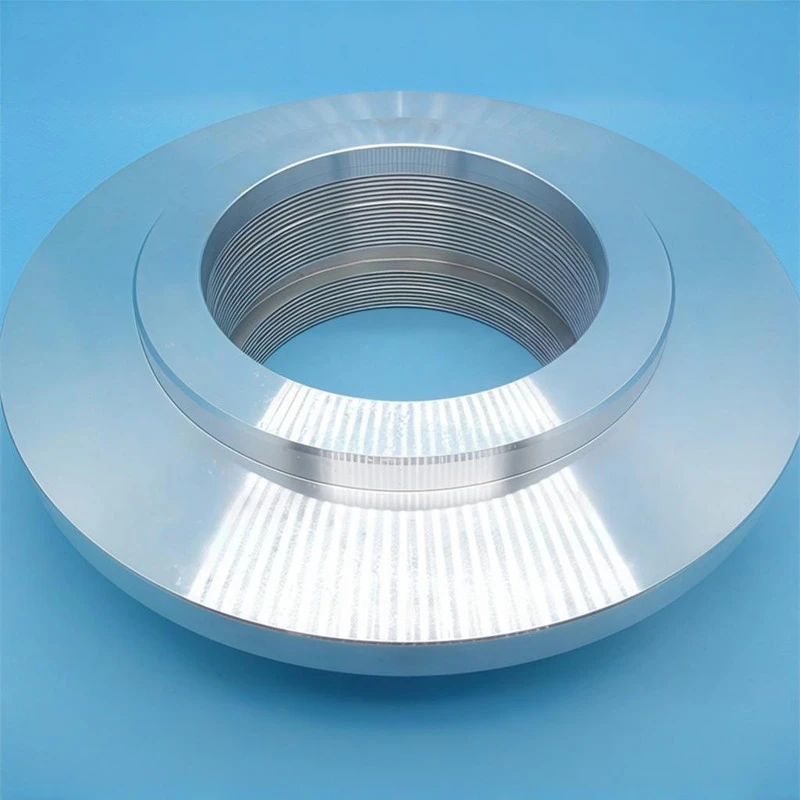
First, let’s start with the basics, because I still meet engineers who mix labyrinth seals up with other types like piston or mechanical face seals. Unlike those, labyrinth seals don’t touch the rotating shaft or the stationary housing at all. That gap between the seal and the shaft is critical—no contact means no wear, even after years of operation, which is why they’re used in applications where other seals would fail in months. The way they stop fluid (gas or steam, usually) from leaking past the gap is by forcing the fluid through a series of small, tortuous paths. Each bend and turn dissipates the fluid’s pressure, so by the time it reaches the other side, there’s almost no pressure left to leak out. The design of those paths is what separates the different seal types, and that’s where the magic (and the money) happens.
Let’s start with the most common one you’ll find in centrifugal compressors and steam turbines: straight-through labyrinth seals. If you’ve ever looked at these, you’ll see a series of straight, evenly spaced teeth machined into a ring that’s mounted to the stationary housing. The shaft is smooth, so the only barrier to the fluid is those straight teeth set at a very precise gap. On paper, this sounds simple—maybe too simple. The downside? Because the path is straight, there’s less pressure dissipation than other designs, so it’s not ideal for high-pressure differential applications. I learned this lesson early on, when a refinery engineer called me in a panic saying their straight-through seal was leaking so much process gas, their compressor efficiency had dropped by 8 percent. The pressure difference across that seal was way higher than what straight-through can handle. We swapped it for a more robust design, and they saved over $120,000 a year in lost energy costs. Still, straight-through seals have their place: they’re cheap to manufacture, easy to install, and work great for low-to-medium pressure applications, like small pumps or blowers where cost is a top priority.
Next up is stepped labyrinth seals, and these are a step up in performance, pun intended. Instead of straight teeth, the housing (or sometimes the shaft) has small, alternating steps that widen and narrow the path as the fluid moves through. Each step creates a small eddy current—think of how a rock in a stream slows the water down—that dissipates more pressure than a straight path. I’ve sold stepped seals to several power plants for their high-pressure steam turbines, and the feedback is consistent: they leak 30 to 40 percent less than straight-through seals in the same application. The tradeoff is that they’re a little more complex to machine, so they cost a bit more upfront. But for most mid-range pressure applications, that small premium pays for itself in energy savings within six to 12 months. A few years ago, a midwest power plant switched their entire fleet of turbine seals from straight-through to stepped, and their monthly energy bills dropped by over $40,000. That’s the kind of return on investment that makes even the most cost-conscious managers happy.
Now, if you’re dealing with very high pressure differentials or extreme operating speeds—like in gas turbines, aerospace engines, or large industrial compressors—you need something that can handle way more abuse. That’s where shrouded labyrinth seals come in, sometimes called knife-edge or honeycomb shrouded seals. Let me explain: instead of teeth that are just thin metal projections, each tooth is mounted inside a shroud that’s lined with a honeycomb structure (think of the inside of a beehive, but made of high-temperature alloy). The honeycomb is key here—when the shaft rotates, if it ever moves slightly (which it always does, even with the best alignment), the knife-edge tooth doesn’t dig into the smooth shaft. Instead, it rubs against the honeycomb, which is soft enough that it doesn’t damage the shaft, but hard enough to wear evenly. I can’t tell you how many times a maintenance team has called me saying their old seal gouged the shaft during a transient load event, costing them $50,000 or more to repair. Shrouded seals eliminate that risk. They also have far less leakage than stepped or straight-through seals in high-pressure applications, because the honeycomb creates even more eddy currents and pressure dissipation. The only downside? Shrouded seals are the most expensive type, and the honeycomb requires careful quality control during manufacturing—one bad cell can throw off the entire performance. But for applications where a seal failure means hundreds of thousands of dollars in lost production, it’s worth every penny. I worked with an aerospace parts manufacturer last year that had a shrouded seal on a test compressor that ran for 12,000 hours without a single leak or wear issue—way longer than their previous straight-through seals, which would fail every 1,000 hours. That kind of reliability is non-negotiable in their industry.
Wait, I should also mention a type that’s gaining popularity in recent years, especially for variable-speed equipment: brush labyrinth seals, sometimes called bristle seals. These aren’t your typical tooth-and-gap seals—instead of a series of teeth, they have a ring of thousands of fine, stiff metal bristles arranged around the shaft. The bristles are just small enough that they brush against the shaft as it rotates, creating a very tight seal gap, but flexible enough that they don’t wear or damage the shaft even during minor misalignment or shaft movement. At first, I was skeptical—they sounded too good to be true, like a brush seal I’d seen on a vacuum cleaner. But after testing a batch for a wind turbine manufacturer, I was sold. Brush seals have 50 to 70 percent less leakage than standard labyrinth seals, and they work great for variable-speed applications where the shaft moves a lot. The catch? They’re not suitable for very high temperatures (above 1,200 degrees Fahrenheit) or extremely corrosive fluids, because the bristles can degrade over time. But for mid-range, variable-speed compressors and pumps, they’re a game-changer. A wind energy client of mine switched their brush seals on their turbine gearbox pumps and reduced their oil leakage by 90 percent, which meant they didn’t have to top off the oil every month—saving them hours of maintenance time and thousands of dollars in oil costs.
I should also clear up a common misconception: labyrinth seals aren’t one-size-fits-all, and choosing the wrong type isn’t just about leakage. It’s also about operating conditions. For example, if your machine runs at very high speeds (over 10,000 RPM), straight-through seals might work, but you’ll get better performance from a shrouded or brush seal. If you have a low-pressure blower for a HVAC system, a cheap straight-through seal will work fine and save you money upfront. But if you’re in a refinery handling volatile process gases, you can’t afford a seal that leaks—you need a shrouded or stepped seal that meets industry safety standards.
Another thing I’ve learned over the years: custom labyrinth seals aren’t just for large, complex equipment. I’ve worked with small machine shops that needed a custom seal for a single small pump, and even though it was a smaller order, we’d work with them to design the right seal for their specific application. Too many suppliers try to push a one-size-fits-all seal, but that’s a mistake. Every machine has unique operating speeds, pressure differentials, fluid types, and alignment tolerances—your seal needs to be tailored to that.
At the end of the day, the goal of a labyrinth seal is simple: keep fluid where it needs to be, prevent it from leaking where it doesn’t, and do it for as long as possible without maintenance. Over my 15 years in this business, I’ve seen how a good seal can save a company millions in energy, downtime, and repair costs, and a bad seal can turn a reliable machine into a money pit.

If you’re wondering which type of labyrinth seal is right for your equipment—whether you’re dealing with a small pump or a large gas turbine—don’t guess. The best way to get the right seal is to share details about your application: what machine are you using, what’s the pressure and speed, what fluid are you handling, and what’s your maintenance schedule? We can walk you through the pros and cons of each type, help you avoid the common mistakes I’ve made over the years, and provide a seal that will work reliably for years to come. Whether you need a straight-through seal for a low-pressure blower or a custom shrouded seal for a high-speed gas turbine, we’re here to help you find the right solution for your needs. Don’t wait until your seal starts leaking—reach out to us today to discuss your requirements, and let’s make sure your equipment runs as efficiently as possible.
Fluid Film Thrust Bearings References
- “Labyrinth Seal Design and Performance for Turbomachinery,” ASME Journal of Engineering for Gas Turbines and Power, 2018.
- Seal Design Handbook, 3rd Edition, American Society of Mechanical Engineers (ASME), 2020.
- Bristle Seal Technology for Industrial Compressors, International Journal of Fluid Machinery and Systems, 2021.
- “Reducing Leakage in Stepped Labyrinth Seals for Steam Turbines,” Power Engineering International, 2019.
Wenzhou Zhengbang Bearing Co., Ltd.
We are one of the most professional labyrinth seals manufacturers and suppliers in China. With abundant experience, we warmly welcome you to buy customized labyrinth seals at competitive price from our factory. If you have any enquiry about free sample, please feel free to email us.
Address: Units 1-1 and 3-1, Building 12, Yongxing Nanyuan Small and Micro Enterprise Startup Park, Binhai 2nd Road, Yongxing Subdistrict, Longwan District, Wenzhou City, Zhejiang Province.
E-mail: zbbearing@zbbearing.com
WebSite: https://www.zb-bearings.com/
