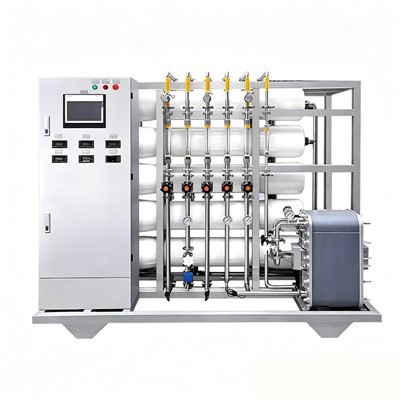
In the desalination industry, dealing with high-turbidity water is a significant challenge that requires advanced technology and reliable equipment. As a supplier of SWRO (Seawater Reverse Osmosis) and BWRO (Brackish Water Reverse Osmosis) equipment, I have witnessed firsthand the complexities and solutions associated with treating water of varying qualities. In this blog, I will delve into how our SWRO equipment effectively handles water with high turbidity. SWRO & BWRO Equipment
Understanding High-Turbidity Water
Turbidity refers to the cloudiness or haziness of a fluid caused by large numbers of individual particles that are generally invisible to the naked eye, similar to smoke in air. In the context of water, high turbidity implies a substantial presence of suspended solids, such as clay, silt, finely divided organic matter, algae, bacteria, and other microorganisms. These particles can cause multiple problems in a desalination process. They can foul the membranes in the SWRO system, reducing the system’s efficiency and lifespan. Moreover, high-turbidity water may contain pathogens and other contaminants that need to be removed to make the water safe for various uses.
Pre – treatment Process in SWRO for High-Turbidity Water
The key to handling high-turbidity water with SWRO equipment lies in an effective pre – treatment process. Our SWRO systems are designed with a multi – stage pre – treatment approach to ensure that the water entering the reverse osmosis membranes is of an acceptable quality.
Coagulation and Flocculation
The first step in our pre – treatment process is coagulation and flocculation. Coagulation involves the addition of a coagulant, such as aluminum sulfate or ferric chloride, to the high – turbidity water. The coagulant neutralizes the electrical charges on the suspended particles, causing them to come together and form larger aggregates. Flocculation follows, where a flocculant is added to promote the growth of these aggregates into larger, more easily settleable flocs. This process is crucial as it helps to remove a significant portion of the suspended solids from the water before it proceeds to the next stage.
Sedimentation
After coagulation and flocculation, the water enters a sedimentation tank. In this tank, the flocs settle to the bottom due to gravity, and the clarified water is skimmed off the top. Sedimentation is an effective way to remove large – sized suspended particles from the water, reducing the turbidity to a more manageable level. The settled sludge at the bottom of the sedimentation tank is periodically removed and treated appropriately.
Filtration
Following sedimentation, the water undergoes filtration. Our SWRO systems typically use a combination of different filtration methods. Multimedia filtration is one of the common techniques, where the water passes through a bed of different media, such as sand, gravel, and anthracite. The different media sizes work together to trap particles of various sizes, further reducing the turbidity of the water.
In addition to multimedia filtration, we also incorporate cartridge filtration. Cartridge filters are designed to remove finer particles that may have passed through the multimedia filter. They are made of various materials, such as polypropylene, and are available in different micron ratings. The choice of micron rating depends on the specific requirements of the SWRO system and the quality of the pre – treated water.
Antiscalant and Biocide Injection
Even after the pre – treatment process, there is still a risk of scaling and biofouling in the reverse osmosis membranes. To prevent scaling, we inject antiscalants into the water. Antiscalants are chemicals that inhibit the formation and deposition of scale – forming salts, such as calcium carbonate and calcium sulfate, on the membrane surface. By preventing scaling, the antiscalants help to maintain the efficiency of the SWRO system and extend the lifespan of the membranes.
Biocides are also injected into the water to control the growth of bacteria and other microorganisms. Microorganisms can adhere to the membrane surface and form a biofilm, which can reduce the membrane’s performance and increase the operating pressure of the system. Our biocide selection is based on the specific characteristics of the water and the requirements of the SWRO system, ensuring effective disinfection without causing damage to the membranes.
Monitoring and Control in High-Turbidity Water Treatment
Monitoring and control are essential aspects of our SWRO equipment when handling high – turbidity water. We use a variety of sensors and monitoring devices to continuously measure the water quality parameters, such as turbidity, pH, conductivity, and pressure. The data collected from these sensors is used to adjust the operation of the pre – treatment system and the reverse osmosis process.
For example, if the turbidity of the incoming water suddenly increases, the system can automatically increase the dosage of coagulant and flocculant during the pre – treatment process. Similarly, the injection rate of antiscalants and biocides can be adjusted based on the monitored water quality and membrane performance. This real – time monitoring and control ensure that the SWRO system can operate efficiently and effectively even when the quality of the incoming water fluctuates.
Case Studies
Over the years, we have supplied our SWRO equipment to various locations with high – turbidity water sources. One such project was in a coastal area where the seawater had a high concentration of suspended solids due to nearby industrial activities. The initial turbidity of the seawater was around 50 NTU (Nephelometric Turbidity Units), which is significantly higher than the recommended level for SWRO systems.
By implementing our multi – stage pre – treatment process, including coagulation, flocculation, sedimentation, and filtration, we were able to reduce the turbidity of the water to less than 1 NTU before it entered the reverse osmosis membranes. The SWRO system then produced high – quality fresh water with a low salt content, meeting the requirements of the customer for industrial use.
Another case was in an inland area with brackish water that had a high turbidity due to agricultural runoff. Our BWRO system, equipped with similar pre – treatment technologies, was able to handle the high – turbidity water effectively. The system not only removed the suspended solids but also reduced the salt content of the water, making it suitable for irrigation and domestic use.
Conclusion
Handling high – turbidity water is a complex but manageable task with the right SWRO equipment and pre – treatment technologies. Our SWRO and BWRO equipment, coupled with a comprehensive pre – treatment process, can effectively remove the suspended solids, control scaling and biofouling, and produce high – quality fresh water from water sources with high turbidity.
Whether you are in the industrial sector, looking for a reliable water source for your manufacturing processes, or in the agricultural or domestic sector, in need of clean and safe water, our SWRO and BWRO equipment can provide you with a solution. We have the expertise and experience to customize our systems to meet your specific requirements and challenges.
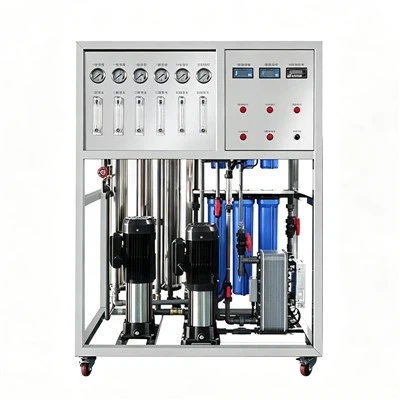
If you are interested in learning more about our SWRO and BWRO equipment or would like to discuss your water treatment needs, we encourage you to reach out to us. Our team of experts is ready to assist you in choosing the most suitable equipment and providing you with a detailed solution.
References
Reverse Osmosis Water System AWWA. (2018). Water Quality and Treatment: A Handbook of Community Water Supplies.
King, C. J. (2013). Separation Processes. McGraw – Hill.
Masters, G. M. (2004). Introduction to Environmental Engineering and Science. Prentice Hall.
Shandong Yanuo Environmental Protection Equipment Co., Ltd.
We’re well-known as one of the leading swro & bwro equipment manufacturers and suppliers in China, featured by quality products and good price. Please rest assured to buy bulk swro & bwro equipment made in China here from our factory. Customized orders are welcome.
Address: North Side of the Road, 1,000 Meters West of the Intersection of Fenghuangshan West Road and Provincial Highway S102, Wangfu Subdistrict, Qingzhou City, Weifang City, Shandong Province.
E-mail: ynhb.499973983@gmail.com
WebSite: https://www.zkyaruo.com/
