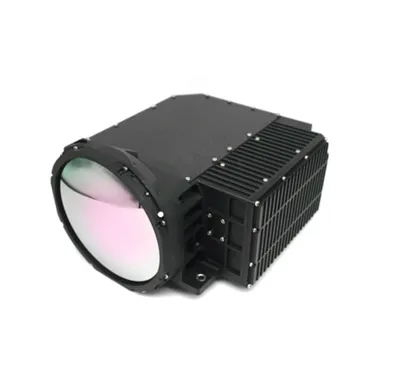
As a supplier of SWIR (Short-Wave Infrared) camera lenses, I’ve witnessed firsthand the increasing demand for high-performance imaging solutions in low-light environments. Whether it’s for surveillance, industrial inspection, or scientific research, the ability to capture clear and detailed images in challenging lighting conditions is crucial. In this blog post, I’ll share some insights and strategies on how to improve the low-light performance of a SWIR camera lens. SWIR Camera Lens
Understanding the Basics of SWIR Imaging
Before diving into the ways to enhance low-light performance, it’s important to understand the fundamentals of SWIR imaging. SWIR light, which ranges from approximately 0.9 to 1.7 micrometers, offers several advantages over visible light. It can penetrate certain materials, such as fog, smoke, and some plastics, making it ideal for applications where visibility is limited. Additionally, SWIR cameras can operate in low-light conditions without the need for artificial illumination, thanks to the natural ambient SWIR radiation.
However, SWIR imaging also presents some challenges. The sensitivity of SWIR sensors is generally lower than that of visible light sensors, and the amount of available SWIR light in low-light environments is often limited. These factors can result in noisy and low-contrast images, which can affect the accuracy and reliability of the imaging system.
Optimizing the Lens Design
One of the key factors in improving the low-light performance of a SWIR camera lens is the design of the lens itself. Here are some design considerations that can help enhance the lens’s ability to capture light in low-light conditions:
Aperture Size
The aperture of a lens determines the amount of light that can enter the camera. A larger aperture, expressed as a lower f-number (e.g., f/1.2), allows more light to reach the sensor, resulting in brighter images. When designing a SWIR camera lens for low-light applications, it’s important to choose an aperture size that balances the need for light-gathering ability with other factors, such as depth of field and optical aberrations.
Lens Coatings
Lens coatings can significantly improve the light transmission of a SWIR camera lens. Anti-reflective coatings reduce the amount of light that is reflected off the lens surfaces, increasing the amount of light that reaches the sensor. Additionally, specialized coatings can enhance the lens’s performance in specific wavelength ranges, such as SWIR. By using high-quality lens coatings, we can minimize light loss and improve the overall image quality in low-light conditions.
Optical Materials
The choice of optical materials can also have a significant impact on the low-light performance of a SWIR camera lens. Some materials, such as chalcogenide glasses, have excellent transmission properties in the SWIR range and can help reduce absorption and scattering of light. By selecting the appropriate optical materials, we can optimize the lens’s performance and improve its ability to capture light in low-light environments.
Selecting the Right Sensor
In addition to optimizing the lens design, selecting the right sensor is crucial for improving the low-light performance of a SWIR camera. Here are some sensor characteristics to consider:
Sensitivity
The sensitivity of a SWIR sensor determines its ability to detect and convert light into an electrical signal. A more sensitive sensor can capture more light in low-light conditions, resulting in brighter and clearer images. When choosing a sensor for a SWIR camera, it’s important to consider its sensitivity in the SWIR wavelength range and select a sensor that meets the requirements of the application.
Noise Performance
Noise is a common issue in low-light imaging, and it can significantly degrade the image quality. A sensor with low noise performance can reduce the amount of noise in the image, resulting in a cleaner and more detailed image. When evaluating a SWIR sensor, it’s important to consider its noise characteristics, such as read noise and dark current noise, and select a sensor that offers low noise performance.
Pixel Size
The pixel size of a sensor can also affect its low-light performance. A larger pixel size can capture more light, resulting in a higher signal-to-noise ratio and better image quality in low-light conditions. However, a larger pixel size also reduces the spatial resolution of the sensor. When choosing a sensor for a SWIR camera, it’s important to balance the need for light-gathering ability with the desired spatial resolution.
Using Image Processing Techniques
Image processing techniques can also be used to improve the low-light performance of a SWIR camera. Here are some common image processing techniques that can be applied:
Noise Reduction
Noise reduction algorithms can be used to reduce the amount of noise in the image. These algorithms work by analyzing the image and applying a filter to remove the noise while preserving the details of the image. There are several types of noise reduction algorithms available, including spatial filters, temporal filters, and wavelet-based filters.
Contrast Enhancement
Contrast enhancement techniques can be used to improve the visibility of the image in low-light conditions. These techniques work by adjusting the brightness and contrast of the image to make the details more visible. There are several types of contrast enhancement techniques available, including histogram equalization, adaptive histogram equalization, and gamma correction.
Image Fusion
Image fusion techniques can be used to combine multiple images taken under different lighting conditions to create a single image with improved low-light performance. For example, a SWIR image taken in low-light conditions can be fused with a visible light image taken in normal lighting conditions to create a composite image that combines the advantages of both imaging modalities.
Calibration and Testing
Calibration and testing are essential steps in ensuring the optimal performance of a SWIR camera lens in low-light conditions. Here are some calibration and testing procedures that can be performed:
Dark Current Calibration
Dark current calibration is a process of measuring and subtracting the dark current noise from the image. Dark current noise is the electrical signal generated by the sensor in the absence of light, and it can significantly affect the image quality in low-light conditions. By performing dark current calibration, we can reduce the amount of noise in the image and improve its overall quality.
Flat Field Calibration
Flat field calibration is a process of correcting the non-uniformity of the image caused by variations in the sensitivity of the sensor and the lens. Non-uniformity can result in a darkening or brightening of the image at the edges or corners, which can affect the accuracy and reliability of the imaging system. By performing flat field calibration, we can ensure that the image is evenly illuminated and that the details are accurately represented.
Performance Testing
Performance testing is a process of evaluating the performance of the SWIR camera lens in low-light conditions. This can include measuring the sensitivity, noise performance, resolution, and other parameters of the lens. By performing performance testing, we can identify any issues or limitations of the lens and make the necessary adjustments to improve its performance.
Conclusion

Improving the low-light performance of a SWIR camera lens requires a combination of optimized lens design, appropriate sensor selection, image processing techniques, and calibration and testing. By following these strategies, we can enhance the ability of the SWIR camera to capture clear and detailed images in challenging lighting conditions.
SWIR Imaging If you’re interested in learning more about our SWIR camera lenses or discussing your specific application requirements, please don’t hesitate to contact us. We’re here to help you find the best imaging solution for your needs.
References
- Smith, J. (2018). SWIR Imaging: Principles and Applications. Springer.
- Jones, A. (2019). Advances in SWIR Sensor Technology. IEEE Transactions on Electron Devices.
- Brown, C. (2020). Image Processing for Low-Light Imaging. Wiley.
Xi’an Zhongke Lead Ir-Tech Co., Ltd.
We are one of the most experienced swir camera lens manufacturers in China, specialized in providing high quality OEM products with the industrial grade. We warmly welcome you to wholesale high performance swir camera lens at an affordable price from our factory.
Address: Building 8,Hard Technology Enterprise Community No.3000,Biyuan 2nd Rd,High-Tech Zone Xi’an,Shaanxi,China
E-mail: sales@lead-ir.com
WebSite: https://www.leadinfrared.com/
